
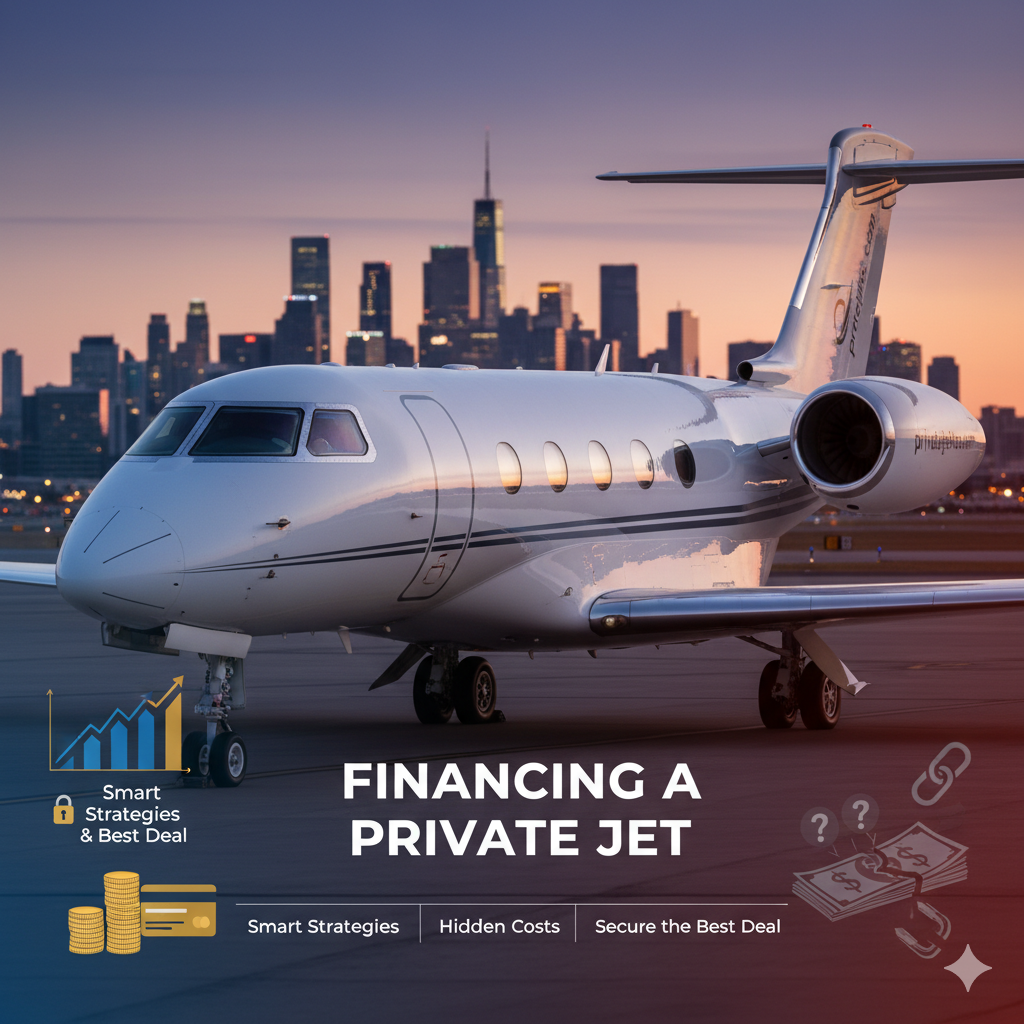
Owning a private jet, is not dream anymore, if you understand the private jet financing methods and laws and options. Flying high doesn’t have to keep your finances grounded. When done right, private jet financing can be a powerful tool for high net worth individuals and businesses, enabling luxury, speed, and flexibility without using all of your resources. This guide covers everything you need: how to finance a private jet, what financing structures exist, interest rate expectations, loan vs lease vs fractional ownership, and how to avoid costly mistakes so you soar first among search results, and in the skies.
Why Private Jet Financing? The Big Vision
Owning a private jet is a major investment. Total costs include the purchase price, maintenance, crew, insurance, hangaring, depreciation, and resale value. Financing can cover those costs, preserve liquidity, and sometimes offer tax advantages. But it introduces interest, risk, and complexity.
Key reasons people finance instead of paying outright:
-
Preserve capital: Keep cash free for other investments.
-
Tax planning & depreciation: Potential deductions on interest, depreciation (depending on jurisdiction).
-
Flexibility: Use structured financing to choose between owning, leasing, or fractional ownership.
-
Upgradability: Easier to trade up jets if you’re not fully tied down in equity.
Financing Structures: Loans, Leases & Fractional Ownership
When it comes to financing, it helps to understand the main models and which situations they best serve.
| Financing Type | How It Works | Pros | Cons | Best Suited For |
|---|---|---|---|---|
| Traditional Loan / Capital Purchase | You borrow funds, pay down principal + interest. You own the jet. | Full control, equity building, certain tax benefits. | Large down payment, depreciation risk, high maintenance costs yourself. | Buyers flying many hours, needing custom modifications, or long-term use. |
| Operating Lease | Lease the jet from a lender; you pay monthly. At end of lease, return or renew. | Low capital outlay, less exposure to depreciation risk, flexible. | Leasing costs may be high, less equity, limited customization. | Corporate users who want flexibility, or changing aircraft needs. Global Jet Capital offers such leases. |
| Fractional Ownership | Buy a share of a jet; share hours, costs, and usage. | Access to private aviation at lower cost; less operational burden. | Less control; fixed hours; you pay management/usage fees. Fractional depreciation issues. | Buyers who fly moderate hours and want luxury without full ownership cost. |
Key Metrics & Terms You Must Understand
To negotiate wisely and choose what’s best, you must understand:
-
Interest rates / APR: Varies depending on credit, jet model, age. Example: personal vs corporate rates differ significantly.
-
Loan to Value (LTV): % of purchase price the lender will finance. Often 70-90%, maybe up to 100% in rare cases.
-
Down payments / equity: Ranges commonly 15-20%, sometimes more. Larger down reduces risk and improves terms.
-
Term and amortization: Length of loan or lease; shorter term = higher monthly cost, lower total interest; longer means lower monthly but more interest. Terms of 5-20 years are common.
-
Depreciation & residual value risk: Jets lose value, especially in early years. Your financing structure or lease must protect you from steep loss.
-
Credit profile / assets under management (AUM): Strong credit, net worth, cash flow, maybe jet management record lend credibility. Some lenders require AUM or collateral beyond the aircraft.
Typical Costs & Interest Rates (2025 Snapshot)
Here are current market ideas and rates (varies by region, jet class, buyer profile):
-
Personal financing APR: ~ 4.5-7% for well-qualified buyers. Corporate financing might get 3.5-6% depending on entity, credit history.
-
LTV: Usually up to 80-90% for local buyers; perhaps lower for international or older aircraft.
-
Terms: 5-10 years is typical, occasionally up to 15 or more for very high loan amounts or special deals. Longer amortization reduces monthly payment but increases total interest paid.
-
Leasing costs: Operating leases often have monthly payments equal to a small % of aircraft value (say 1-3%) plus maintenance, insurance, crew, etc.
How Credit Score & Financial Profile Affect Financing
Your financing options and cost depend heavily on your creditworthiness and financial structure:
-
High credit scores (700-750+) combined with strong business/corporate balance sheets tend to get the best interest rates, high LTVs, flexible terms.
-
Moderate credit (650-699) means higher interest (closer to upper end) and stricter down payments or collateral.
-
For international buyers or those with complex ownership (multiple entities, trusts), lenders look closely at structure, tax exposure, maintenance history, asset condition.
Hidden Costs & Legal / Tax Considerations
Financing a private jet isn’t just about payments. To avoid nasty surprises:
-
Maintenance, Fuel, Crew, Insurance: These can amount to millions per year for large cabin jets. Always budget operating costs.
-
Regulatory complex taxes: Import duties, VAT or GST, depreciation policy; cross-border ownership jurisdiction matters.
-
Registration & ownership structure: Using LLCs, trusts, offshore entities legal and tax implications must be handled with counsel.
-
Depreciation limits, residual value: If you sell or trade in, what the jet valued at matters; this influences lease terms and financing collateral.
-
Obsolescence & technology upgrades: Avionics, cabin tech, engine efficiency all affect resale.
Step-by-Step Guide to Getting Private Jet Financing
-
Define purpose & usage: How many hours per year? Private/corporate/fractional? Regions flown? Size/type of aircraft.
-
Gather financials: Net worth, income statements, business plans, existing assets. Stronger financials = better terms.
-
Choose ownership structure: Own personally? Via corporation? Trust or LLC? This affects liability and tax.
-
Explore financing alternatives: Loan, lease, fractionals, sale/leaseback. Compare total cost over time.
-
Get pre-qualified / request quotes from specialized aircraft financing lenders and brokerages.
-
Inspect asset: Age, maintenance history, hours flown, title issues. For used jets, inspection and appraisal are crucial.
-
Negotiate terms: Interest rate, term, down payment, residuals, maintenance agreements, insurance, repossession clauses.
-
Plan for exit: How long will you keep? Plan resale, trade, lease return; monitor residual value.
Compare & Choose the Best Financing Model
Let’s use an example.
Suppose you want to buy a midsize jet worth $15 million, flying ~250 hours/year, corporate usage, excellent credit.
-
Buying outright: You pay full $15m, upfront and absorb depreciation but own asset, get potential tax deductions.
-
Loan financing: Put down 15-20% (≈ $2.25-3m), finance remainder over 10 years at maybe 5% APR. Payments might be ~$150-200K/month (depending on structure), plus all operating costs.
-
Operating lease: More predictable monthly cost, maybe 1–2% of aircraft value per month or more, plus operational and insurance costs. Less capital tied up.
-
Fractional ownership: You pay a share (say 1/8th = $1.875m), get ~1/8th of hours, share operational costs. But limited availability, restrictions.
You must run total cost of ownership (TCO) over 5, 10, 20 years to understand break even.
Best Practices: What the Experts Do That You Should Too
-
Work with aviation finance specialists / brokers who know private jet lenders, underwriting, and can negotiate better terms.
-
Always include contingency for unexpected expenses: maintenance, engine overhauls, regulatory changes.
-
Keep up fingerprint of market residuals so you can anticipate depreciation.
-
Use warranties or service programs (e.g. engine and airframe programs) to mitigate repair cost risk.
-
Structure ownership to optimize tax benefits while managing liability (seek legal/tax advice).
Summary & Key Takeaways
-
Private jet financing is not one size fits all. The best option depends on credit, usage, ownership structure, and how long you plan to keep the jet.
-
Interest rates are influenced by credit quality, aircraft age/model, LTV, region.
-
Lease and fractional models offer flexibility and lower risk; owning offers control and potential long term savings.
-
Hidden costs (depreciation, maintenance, insurance, regulatory/tax) often make or break the financial equation.
-
Careful planning, expert advice, and realistic usage assumptions are essential.
Frequently Asked Questions (FAQs)
Q: Can I get 100% financing for a private jet?
A: Rare, but possible for exceptionally strong credit profiles, newer aircraft, and often with additional collateral or personal guarantees. Expect very high scrutiny and possibly higher interest.
Q: Is leasing cheaper than buying long-term?
A: It depends. Leasing reduces upfront cost and depreciation risk but may cost more over many years. Buying gives ownership benefits, potential tax advantages, and flexibility with usage. Do a total cost analysis over the projected ownership period.
Q: What down payment should I expect?
A: Usually 15-20% on financed amount; sometimes more depending on aircraft, lender, age, credit. Down payment reduces amount financed and improves loan terms.
Q: How does international ownership affect financing & tax?
A: Ownership in foreign jurisdictions might trigger extra taxes, import duties, different depreciation rules. Lenders may require more paperwork and lower LTV. Ownership through entities/trusts needs legal/tax advice.
Conclusion
Financing a private jet is an exciting step but also one that demands understanding it and searching deeply for options. By understanding the variety of financing options, recognizing the cost levers (interest, depreciation, maintenance), and structuring your purchase intelligently (ownership, credit profile, exit strategy), you can unlock the luxury and freedom of private aviation without flying blind financially. Use professional help, plan carefully, and ensure your financial journey in aviation is as smooth as your flight.


