
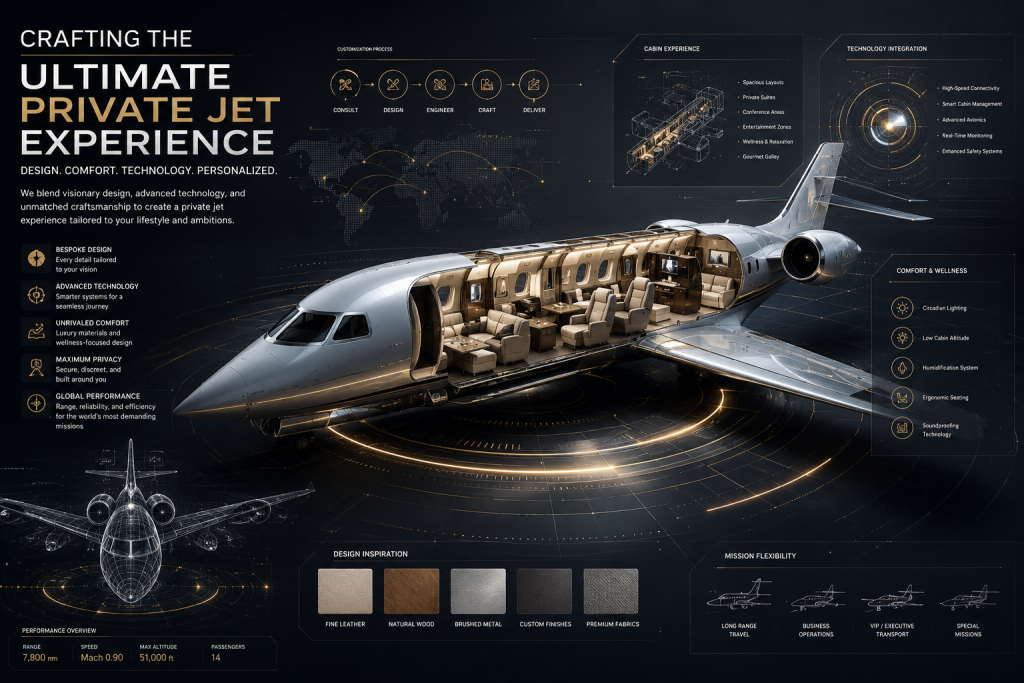
Crafting the Ultimate Flight Experience: A Guide to Bespoke Customization
For ultra-high-net-worth individuals, family offices, corporations, and aviation enthusiasts, purchasing a private jet is only the beginning of the journey. The true distinction lies in transforming an aircraft into a highly personalized environment that reflects the owner’s lifestyle, operational requirements, and brand identity. Bespoke private jet customization has evolved from simple aesthetic upgrades into a sophisticated process involving design, technology, comfort, productivity, and long-term asset strategy.
Today’s private aircraft owners seek more than transportation. They want a flying office, a luxury residence, an entertainment venue, and a secure sanctuary at 45,000 feet. The result is a growing demand for aircraft interiors that combine engineering excellence with exceptional craftsmanship.
Understanding how to approach customization strategically can significantly enhance ownership satisfaction while protecting long-term aircraft value.
By: PrivateJetio Aviation Advisory Team
Why Bespoke Private Jet Customization Matters
The world’s most successful entrepreneurs, executives, celebrities, and investors often view their aircraft as extensions of their personal and professional brands.
Unlike commercial aviation, private aviation allows owners to control every aspect of the travel experience.
Customization delivers benefits including:
- Enhanced passenger comfort
- Improved productivity during travel
- Stronger privacy and security
- Increased operational efficiency
- Greater family convenience
- Stronger aircraft resale positioning
- Brand alignment for corporate operators
A carefully designed aircraft becomes more than a transportation asset. It becomes a strategic tool that supports business objectives and lifestyle priorities.
The Evolution of Private Jet Cabin Design
Modern private jet cabin design has undergone remarkable transformation during the past two decades.
Traditional interiors focused primarily on luxury materials and visual appeal. Today’s aircraft owners demand environments that seamlessly integrate technology, ergonomics, wellness, and functionality.
Modern cabin design projects typically focus on:
Human-Centered Design
Cabins are increasingly engineered around passenger behavior.
Designers analyze how passengers work, relax, dine, sleep, and communicate throughout flights.
The objective is to create intuitive spaces that feel natural and comfortable during both short and ultra-long-range missions.
Multi-Purpose Environments
A single cabin area may function as:
- Executive conference room
- Dining area
- Entertainment lounge
- Sleeping suite
- Family relaxation zone
Flexibility has become one of the most important design principles in modern aircraft interiors.
Wellness-Focused Features
Owners increasingly prioritize health and wellbeing.
Popular additions include:
- Advanced air purification systems
- Circadian lighting technology
- Noise reduction materials
- Improved humidity management
- Ergonomic seating systems
These enhancements help reduce travel fatigue and improve passenger performance upon arrival.
Defining Your Vision Before Beginning
One of the most common mistakes aircraft owners make is focusing on aesthetics before establishing operational objectives.
Successful customization begins with a clear understanding of intended aircraft use.
Important questions include:
- Will the aircraft primarily support business travel?
- Will family members frequently travel onboard?
- Are international missions common?
- Will overnight flights occur regularly?
- Is onboard productivity a priority?
- Will the aircraft host clients or investors?
- Is charter revenue part of the ownership strategy?
The answers shape every subsequent design decision.
A corporate executive flying between New York and London may prioritize connectivity and conference capabilities.
A family office traveling internationally may focus on sleeping accommodations, entertainment systems, and family comfort.
Creating the Ultimate Luxury Aircraft Interior
A premium luxury aircraft interior balances elegance with functionality.
True luxury is not simply about expensive materials. It is about thoughtful execution.
Material Selection
Premium materials commonly include:
- Handcrafted leather
- Natural stone veneers
- Exotic wood finishes
- Carbon fiber accents
- High-end textiles
- Custom metal detailing
The best interiors combine visual appeal with durability and weight efficiency.
Color Psychology
Color selection influences passenger mood and perceived cabin space.
Lighter palettes create openness and sophistication.
Darker tones often communicate exclusivity and executive prestige.
Many modern aircraft utilize neutral palettes enhanced by subtle brand colors and custom design accents.
Lighting Design
Lighting dramatically affects cabin atmosphere.
Advanced systems allow passengers to transition between:
- Work mode
- Dining mode
- Relaxation mode
- Sleep mode
- Arrival preparation mode
Intelligent lighting contributes significantly to the overall VIP cabin experience.
Aircraft Personalization Beyond Interior Design
Aircraft personalization extends far beyond seating and finishes.
Modern owners increasingly customize multiple aspects of the ownership experience.
Exterior Branding
While many owners prefer anonymity, others choose discreet branding opportunities.
Options include:
- Custom paint schemes
- Signature color accents
- Corporate identity elements
- Tail design personalization
These modifications create a unique visual identity without compromising elegance.
Personalized Service Features
Owners frequently customize:
- Beverage programs
- Dining equipment
- Storage systems
- Cabin accessories
- Guest amenities
The objective is to ensure consistency between ground and flight experiences.
Lifestyle Integration
Some owners incorporate features supporting specific interests:
- Wine storage systems
- Wellness equipment
- Gaming environments
- Media production capabilities
- Art displays
Customization increasingly reflects personal passions rather than conventional aviation standards.
Designing Executive Jet Interiors for Productivity
Business aviation exists primarily to save time and increase productivity.
As a result, executive jet interiors often prioritize work efficiency.
Conference Areas
Dedicated meeting zones enable productive discussions throughout the flight.
Features may include:
- Secure communication systems
- Presentation displays
- Video conferencing platforms
- Collaborative workspaces
Connectivity Infrastructure
Reliable connectivity is now considered essential rather than optional.
Leading systems support:
- High-speed internet
- Global coverage
- Video conferencing
- Cloud access
- Real-time collaboration
Connectivity influences aircraft usability more than almost any other technology investment.
Workspace Ergonomics
Effective workspace design considers:
- Seating comfort
- Table functionality
- Lighting quality
- Power accessibility
- Device integration
Well-designed workspaces transform travel time into productive business hours.
The Rise of Smart Cabin Technology
Technology has become central to private aviation luxury.
Modern aircraft increasingly resemble intelligent environments.
Cabin Automation
Passengers can control:
- Lighting
- Temperature
- Window shades
- Entertainment
- Communications
Most systems now operate through smartphones and tablets.
Artificial Intelligence Integration
Emerging technologies allow cabins to learn passenger preferences.
Future systems may automatically adjust:
- Lighting profiles
- Climate settings
- Entertainment selections
- Seating configurations
This level of personalization represents the next frontier in private aviation.
Cybersecurity Considerations
Connected aircraft require robust digital protection.
Owners increasingly invest in:
- Secure communication networks
- Encrypted data systems
- Access control solutions
- Threat monitoring capabilities
Cybersecurity has become a critical component of premium aircraft customization.
Achieving the Ultimate VIP Cabin Experience
The most successful projects focus on passenger experience rather than isolated features.
Creating a memorable VIP cabin experience requires understanding every stage of the journey.
Arrival Experience
Passengers begin evaluating the experience before boarding.
Customization opportunities include:
- Personalized welcome systems
- Signature branding
- Custom cabin scents
- Tailored service protocols
In-Flight Comfort
Exceptional comfort comes from multiple elements working together.
These include:
- Seat design
- Acoustic engineering
- Climate control
- Lighting systems
- Cabin layout
Small details often have the greatest impact.
Sleep Optimization
Long-range travelers increasingly prioritize sleep quality.
Leading customization programs include:
- Dedicated sleeping suites
- Premium bedding systems
- Noise management technologies
- Advanced lighting control
High-quality sleep directly improves post-flight performance.
Custom Aircraft Completion: Understanding the Process
The custom aircraft completion process can be complex.
Owners should understand major project phases before beginning.
Phase 1: Strategic Consultation
This stage defines objectives, priorities, and budget.
Stakeholders often include:
- Aviation consultants
- Designers
- Completion centers
- Family office representatives
- Flight department personnel
Phase 2: Concept Development
Design teams create preliminary concepts.
These may include:
- Cabin layouts
- Material palettes
- Technology integration plans
- Cost projections
Phase 3: Engineering Validation
Engineers verify that proposed designs meet:
- Safety regulations
- Weight limitations
- Certification requirements
- Performance standards
Phase 4: Manufacturing and Installation
Craftsmen produce custom components.
Installation typically occurs at specialized completion centers.
Phase 5: Testing and Delivery
Final testing ensures every system functions properly before aircraft delivery.
Aircraft Refurbishment Versus New Completion
Not every owner requires a new aircraft.
Aircraft refurbishment projects can deliver extraordinary value.
When Refurbishment Makes Sense
Refurbishment may be ideal when:
- The aircraft remains mechanically strong
- Cabin aesthetics appear outdated
- Technology requires modernization
- Ownership goals have changed
Typical Refurbishment Upgrades
Popular projects include:
- New seating systems
- Connectivity improvements
- Lighting modernization
- Galley enhancements
- Entertainment system replacement
A well-executed refurbishment can dramatically improve passenger experience while preserving capital.
Impact on Resale Value
Buyers increasingly favor aircraft with updated interiors and modern technology.
Strategic refurbishment investments often improve marketability and support stronger resale outcomes.
Balancing Customization and Asset Value
Many owners worry that excessive personalization could limit future buyer appeal.
This concern is valid.
The Customization Spectrum
Aircraft customization typically falls into three categories:
- Broad Market Appeal
- Balanced Personalization
- Highly Specialized Design
Balanced personalization often provides the best combination of enjoyment and resale performance.
Features That Generally Support Value
Common value-enhancing investments include:
- Modern connectivity
- Premium materials
- Updated avionics integration
- Efficient cabin layouts
- Contemporary aesthetics
Features That May Reduce Buyer Interest
Potentially limiting features include:
- Extremely unique color schemes
- Highly niche functionality
- Excessive branding
- Unconventional layouts
Aviation advisors help owners identify appropriate balance points.
Sustainability and Future-Proof Customization
Environmental considerations increasingly influence aircraft design decisions.
Owners now seek sustainable solutions without compromising luxury.
Sustainable Materials
Emerging options include:
- Eco-certified woods
- Sustainable textiles
- Lightweight composites
- Recyclable materials
Weight Reduction
Reducing weight improves:
- Fuel efficiency
- Range capability
- Environmental performance
Even modest reductions can generate significant lifetime savings.
Future Technology Readiness
Smart owners design cabins capable of supporting future upgrades.
Flexible infrastructure reduces future modification costs and extends aircraft relevance.
Working with the Right Advisory Team
Customization success depends heavily on expert guidance.
Aircraft owners should carefully evaluate advisors, designers, and completion providers.
Important selection criteria include:
Aviation Expertise
The team should understand:
- Aircraft operations
- Certification requirements
- Ownership structures
- Resale market dynamics
Design Capability
Strong design expertise ensures aesthetic excellence without sacrificing functionality.
Project Management
Complex customization projects require coordination among dozens of stakeholders.
Experienced project managers reduce delays, budget overruns, and execution risks.
Strategic Perspective
The best advisors view customization through the lens of total ownership value rather than isolated design preferences.
Common Mistakes Aircraft Owners Should Avoid
Many expensive customization mistakes can be prevented through proper planning.
Prioritizing Appearance Over Function
Beautiful cabins fail when they do not support actual travel needs.
Ignoring Future Resale Considerations
Every customization decision should consider future marketability.
Underestimating Technology Requirements
Connectivity expectations continue to evolve rapidly.
Choosing Vendors Based Solely on Price
Low-cost providers often create expensive long-term challenges.
Failing to Seek Independent Advice
Independent aviation consultants provide objective perspectives that manufacturers and completion centers may not offer.
The Future of Bespoke Private Jet Customization
The next generation of private aviation luxury will be defined by personalization, intelligence, and adaptability.
Future cabins will likely feature:
- AI-driven passenger experiences
- Biometric personalization
- Enhanced wellness technologies
- Sustainable luxury materials
- Integrated digital ecosystems
As expectations evolve, aircraft will increasingly function as highly customized environments tailored to individual lifestyles and business requirements.
Owners who approach customization strategically will enjoy superior travel experiences while preserving long-term asset value.
Conclusion
Bespoke private jet customization represents one of the most powerful opportunities to transform an aircraft from a transportation asset into a strategic lifestyle and business tool. From luxury aircraft interior selections and advanced technology integration to executive productivity solutions and future-ready sustainability initiatives, every customization decision contributes to the overall ownership experience.
The most successful projects begin with clear objectives, professional guidance, and a balanced approach to personalization. Whether pursuing a new custom aircraft completion project or an extensive aircraft refurbishment, owners should focus on creating environments that support their specific travel patterns, business priorities, and long-term asset goals.
At PrivateJetio, we help aircraft buyers, owners, and family offices evaluate customization opportunities, completion strategies, refurbishment investments, and long-term ownership decisions. Before making significant customization commitments, consider obtaining independent advisory support to ensure every decision aligns with both your lifestyle objectives and financial interests.
Frequently Asked Questions
What is bespoke private jet customization?
Bespoke private jet customization involves tailoring an aircraft’s interior, technology, layout, and passenger experience to meet the specific preferences and operational needs of its owner.
How long does a private jet customization project take?
Project timelines vary significantly. Minor refurbishment projects may take several months, while complete custom aircraft completion programs can take a year or longer depending on complexity.
Does customization increase aircraft value?
Strategic customization often improves marketability and resale appeal, particularly when upgrades include modern technology, premium materials, and contemporary cabin designs.
What is the difference between aircraft refurbishment and aircraft completion?
Aircraft completion typically refers to finishing a new green aircraft, while aircraft refurbishment involves upgrading an existing aircraft’s cabin, systems, or appearance.
Should owners hire an independent aviation advisor?
Yes. Independent advisors provide objective guidance on design, technology, costs, completion providers, and long-term asset implications, helping owners make informed decisions.
ReferenceS:
- National Business Aviation Association (NBAA) — https://nbaa.org
- General Aviation Manufacturers Association (GAMA) — https://gama.aero
- Federal Aviation Administration (FAA) Business Aviation Resources — https://www.faa.gov
- International Business Aviation Council (IBAC) — https://ibac.org
- European Union Aviation Safety Agency (EASA) Business Aviation Information — https://www.easa.europa.eu


